Showing posts with label clients. Show all posts

Wednesday, January 28, 2015

Keep Your Appointment (and What to Do When They Don't)

 Tattoo Nerd,

 I have been in the business for about 8 years now, and I have this client that got work from me when I was just staring out.  I hear from her once every year or so.  She asks about a tattoo for herself or a friend, and sets an appointment.  We hash out some of the details before I notice that she is getting a little flakey about keeping in contact and confirming her appointment.  This last week, she settled on a day but not a time, told me two days prior that she would get back to me about the design, never confirmed, and did not respond to any of my messages the day of the tattoo.  It is frustrating, and I am thinking that I should just write her off and not deal with her anymore.  I feel bad, because she was one of my first clients, but I think I have hit my limit.

 What do you think?

 First of all, let me say that I just love that people are starting to refer to me as "Tattoo Nerd".  I consider it high praise that I am being recognized for my work.  

 I think we, as tattoo artists, have all had clients like the one you described,  In fact, probably multiple clients.  I am not certain if the problem is a matter of casual disrespect or an exaggerated view of tattoo artists.  On the one hand, it could be that people do not consider being a tattoo artist a "real" profession.  They have no real concept of the time, dedication, and effort that goes into being a tattooer, often because they have not experienced that kind of effort in their own pursuits.  They may also fail to recognize the expense of setting-up for a tattoo or drawing a design in advance, because, hey, that is what we do for fun, right? 

 On the other hand, they may realize we are professionals and have a high degree of respect for what we do.  In their minds, we tattooers are all "cool".  We are causal and laid back.  If they cannot make their appointment, it is okay, because we are hip and understanding.  That is why we are tattooers, because we are cool and talented.  It is no big deal to us.  

 Dear friends and tattoo patrons, neither of these perspectives are correct.  Tattooers are business professionals.  They can be more casual about their approach to business, but when you fail to make your appointment it hurts our bottom-line.  We are not paid an hourly wage, and any time we spend engaged with a client is with the goal of there being a cash-reward for our efforts.  This includes email exchanges, phone calls, drawing, follow-up discussions, confirmation of an appointment, and setting-up for the tattoo.  Those materials on the tattooers table; medical liners, ink caps, needles, tubes, inks, paper towels, ointments, etc, are not cheap, and come out of the tattooer's wallet.  The shop may provide for some of his or her supplies, but even that is with the expectation that a cash-reward will result from their use.  When you skip-out on an appointment, it is costing your artist money.

 As a customer, ask yourself this: you set an appointment with your tattooer and when you arrive at the studio, he or she is not there.  No call, no note, just not there.  How many times would this need to happen before you sought out another tattooer?  If you put up with this twice, you are extremely charitable.  

 It is tempting, as a tattooer, to take this attitude and black-list those clients that consistently skip-out on appointments.  As business-persons, we cannot afford that mentality.  Think of it this way; you own a retail store.  There is a guy who comes in once a week.  He browses your wares, asks you some questions, doesn't cause any problems, and doesn't buy anything,  He just wastes some of your time.  You could tell him to buy something or get out, but that will create an unhappy customer.  He WILL tell everyone he knows that you treated him badly; the fact that he was wasting your time weekly and never made an actual purchase will not be mentioned.  Not only have you made no money, you now have a black-mark against your reputation as a business.  You are better off just dealing with it, and maybe one glorious day that "customer" will actually buy something.

 When a tattooer is just starting out, we feel lucky just to have someone consider us for work.  We listen to every pie-in-the-sky promise to be on-time for an appointment, to bring friends to us, to help get our name out, etc.  It takes a few years to realize that cash is king, and that all the promises in the world are meaningless until the money is in your hand.  It takes a few more years before we are good enough to establish that kind of standard.  An appointment is not an appointment without a deposit.  When I started out, my clients would have balked at the idea that they needed to pay me $50 in advance to keep a slot in my schedule open for them.  Now, it is expected that my time comes at a premium.

 For sentimental reasons, I understand the reservations about changing the way you handle one of your first clients, but after 8 years of experience, you have grown enough to start being taken seriously.  Don't black-list your clients, but do let the know that you have grown as a tattooer and that your time is in demand.  When your client reaches out to you again for a tattoo, let them know that you cannot set an appointment without a deposit.  No drawing anything up, no penciling anyone in.  When they are ready to pay a deposit, they are ready to set an appointment.  They are always welcome to walk-in and see if you are available, but without cash in advance there will be no promises.  Those who appreciate your work and respect the value of your time will have no problem with your policy. 

 Jason Sorrell is a writer, tattoo artist, satirist, artist, and generally nice guy living in Austin, TX.  He loves answering questions about tattoos.  Shoot him a message at https://www.facebook.com/tattoonerdz/.


Tuesday, December 2, 2014

What to Do When Someone Wants a Bad Tattoo

 This question was posed in a forum I follow:

 "We've all had clients walk in with a poorly rendered design that their sister/cousin/whoever has drawn for them that you know will end-up on a tattoo-fail-blog.  A design or concept you would not want your name attached to.  I take pride in my work and have gotten in trouble for refusing to do a tattoo someone requested, but it is my career and not the shop-owner's.  How do you handle it?"

 It happens.  Someone walks in with an ill-conceived design or concept.  It could be as simple as something that might be a wonderful piece of art but does not translate well into a tattoo.  Or, it could be something that is badly drawn that the client insists they want as is.  How should this be handled?

A questionable potential client...


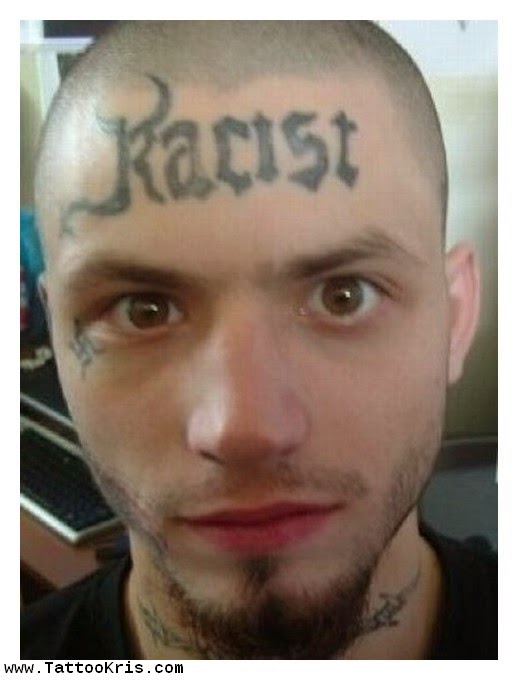
 There are limits to what you should or should not tattoo.  Most shops I have worked at, for example, refused to do tattoos that could be construed as gang-related, racist, or derogatory to sensitive segments of our society.  This is for two reasons.  First, the shop's reputation is on the line.  When you do that kind of tattoo, you become known for doing that kind of tattoo.  Others may come requesting that kind of tattoo, but you may put-off a larger clientele base that would consider being associated with that kind of work distasteful.  It is not worth the trouble.  Second, you are doing that client a favor.  One day, they may realize that the tattoo they thought they wanted to be "in" with the group they where trying to impress has hampered them socially and in finding employment.  Your saying "no" may be saving them years of regret in the future.

 These are solid limits that you should stick by.  Everything else comes down to artistic integrity, which can mean many things.  On the one hand, you as a tattoo artist want to have a body of work that suggests excellence and skill.  A poorly conceived design that the client insists on will not help your cause there.  

Funny until your grand-kids get a roll of quarters.

 However, on the other hand is your integrity as a tattoo artist to serve the client.  It is his or her tattoo, not yours.  Your function is to give the client what they want to the best of your ability.  Refusing to do certain tattoos can harm your reputation; you can be perceived as being "stuck-up" or thinking that you are too good to give someone what they want.  While you may be right about a design being bad, the hurt feelings caused by not doing the tattoo can be more damaging to your reputation than doing a bad tattoo.

 If a client comes in with a design that they commissioned or drew themselves, that design has an inherent emotional value to them.  If you look at the design and see a hot-mess, it is your job to educate the client as to their options.  First, be gentle and kind about the design.  Praise the work of the artist.  Ask how much experience that artist has.  Often, it may only be a few years, which can work to your advantage when you try to convince the client to go another way.  Find something you can say is positive about the design, and talk to the client about why they want it.  That design may be something that someone who has passed away has drawn or has some other sentimental value attached to it.  If that is the case, you do not want to change it, or change it much.  The client is not concerned about the quality of the design, only its sentimental value.

 If it is just a design that the client likes, they can usually be persuaded to let you change it.  This is the time to educate the client on the differences between art and tattoo art.  Explain the limits of the medium, why the design may not work well in the skin, or issues with the design itself you are concerned about (proportion, flow, etc).  Suggest allowing you to re-draw the design to make it more like a tattoo.

I really hope this was drawn by the client.

 If the client insists that they want the design as-is, you can try to price yourself out of the tattoo, although this is not always a good idea.  Show the client your portfolio and discuss your style and your strengths.  This may get the client thinking the design could be better.  If after seeing your portfolio the client still wants the design as-is, offer a price 25-50% above what you would normally charge.  If they ask why it is so expensive, explain the effort that will be required to render that design as accurately as possible and overcoming the limits you described about tattooing.  

 Also, have a client sign an "informed consent" waiver, a document that states that you, as the tattooer, have explained that the design selected is ill-advised, and you have discussed with them the limits of the tattoo process and potential issues they may face.  While it won't save your reputation if the client a year from now tries to blame you for a bad design to their friends (why did he let me get this tattoo?), it will give them another moment to re-think what they are doing.

 When you tattoo a design that you do not like, a huge mistake is made if you do not give it the same effort and attention that you would a design you do like.  A design you do not like should be given more effort, to make it as good as possible.  Every line should be clean and every color solid; cut no corners.  Even if the design is bad, the tattoo itself should be excellent.

 Finally, take a photo of the design and the tattoo side-by-side.  This can work to your advantage in your portfolio.  The design may be bad, but future clients can see just how precise and accurate your were in it's rendering, and they can see that the client elected to get that design, as it is distinct from the other tattoos in style and format in your portfolio.

 It is tempting for a tattooer to limit themselves to tattoos that they like or are in a style they appreciate.  It is good to know your limits; one who is not experienced in doing portraits should probably explain to a client who wants a portrait that it is not your thing.  That is being responsible.  Sticking to your style in other matters, however, should not be a major concern until the demand for your style is so great that you are turning down tattoos due to being booked months in advance.  

 Keep in mind also that it is not just your reputation on the line, but your shops as well.  The shop has a stake in every client that walks through their doors beyond their percentage.  The advertising dollars spent brought that client into the shop, which means every client that comes in is an opportunity to recoup that cost that should not be wasted. A client who does not get what they want from a shop will not talk about the snooty artist, but the snobby shop that refused to give them their tattoo.  The shop they go to that does do the tattoo will only encourage this way of thinking in their minds.

Actually tried to sue her artist over this choice.

 Finally, it may not be the design that is objectionable, but the placement.  The hand or facial tattoo will impact that client for the rest of their life.  That silly tattoo across their ass may seem cute now, but not so cute in twenty years.  Advise the client as best you can about the potential risks, and if they insist, video-tape the process and use it for advertising.  

 The bottom line is that tattooing is a service-industry.  We give our clients what they want to the best of our ability.  Do your best to give them a great tattoo, and if they insist on a poor design at least they will get it fully aware of your concerns and in a manner that is as technically sound as possible.


 Jason Sorrell is a writer, tattoo artist, satirist, artist, and generally nice guy living in Austin, TX.  He loves answering questions about tattoos.  Shoot him a message at https://www.facebook.com/tattoonerdz/

Friday, November 14, 2014

Following Through With Your Client

 "Jason,

 I read one of your articles, and I have some questions.  I recently got a tattoo and I am concerned about the way it is healing.  I don't want to ask my artist because I don't want them to get angry with me for doing something wrong..."

 I get an email like this at tattoonerdz@gmail.com at least twice a week.  Today, after responding to one such email, I found myself wondering why the client did not go back to her artist?  If I go to a doctor and have a question about the procedure or the instructions I was given, I call that doctor and ask.  Ditto for my electrician, my plumber, my auto-mechanic, even my grocer.  If I have a question about a service, I go back to the source.  Why is it different for these tattoo artists and their clients?

 I do not consider myself a great artist.  I am always striving to improve, and I do well as a tattooer, but I am not great.  I write a fair article that people seem to enjoy, but I do not consider myself a great writer.  I am not well known in the tattoo community.  I am making a bit of a name for myself, but even the greats in tattooing are only known by a minuscule percentage of the population.  My point is that these people did not seek my advice because of who I am.  They came to me because of something their artists did, or did not, do.  

 When I get a question from another tattoo artist's client, I do everything I can to avoid being critical of the artist or their work.  This is not a matter of professional respect for my fellow artists, but of respect for their clients.  They are already so clearly anxious about their tattoo that they have reached out to a total stranger for advice. They don't need some guy they will probably never meet making things worse by telling them they made a huge mistake with their choice of tattooer.  That ship has already sailed.  When they get to me, they want an answer, and they want to be re-assured.  

 I give them the information they need based on my own experience and research, and I always encourage them to talk to their tattoo artist and follow his or her instructions.  It is your work, and if you are a professional then you will be fully invested in making certain that the tattoo is the best it can be and your client is happy.

 But, if your client understood that, then why did they reach out to me?

 Getting a tattoo is intimidating.  As artists, I think we forget what it is like to walk into a tattoo shop for a client.  For us, walking into a tattoo shop is like coming home.  For a client, they have no idea what to expect, but they know tattoos involve pain and can go wrong. They know they are going to spend potentially hundreds of dollars in the hope that the artist they select can give them a tattoo they will be happy with.  There is always some trepidation for a client when getting a tattoo, especially that first tattoo from an artist they just met.

 Artists are usually very good at the sell.  They point out the strengths of their portfolio. They demonstrate a firm expertise about safety procedures and best practices when tattooing.  They have an almost encyclopedic knowledge of tattoo history and the industry.  When they get their client in the chair or on the table, they can be very personable.  They can chat the client up and keep their mind off the pain of the tattoo.  They joke and keep things light.

 However, once the tattoo is completed, it usually is about getting the client out the door.  For the artist, the transaction is complete.  They offer after-care instructions, maybe set an appointment for their next session, and thank them as they leave.

 That is not what your client needs.

 We generally tell the client that the tattoo healing process will take about two weeks.  We also know that while they are looking at their new tattoo in the mirror, they are not listening to us.  That ink in their skin is your reputation.  If you are wise about your business, you see every tattoo you do as an advertising investment.  You know that most issues with a tattoo occur when the client does something wrong during the first two weeks.  Why would you leave your reputation to chance in the hands of your client?

 When I go to the doctor, I get a call from a nurse a couple of days later.  It is called a "wellness check", just to confirm that I understand the instructions I was given, that the treatment is effective and not having any unforeseen consequences, and that I am generally content with the visit to the doctor.  In any real sense, how different is what we do from what a doctor might do who performs minor surgery?  

 I typically reach out to my clients after just a few days for the same reasons; do they understand and are the following the instructions I gave them, and do they have any questions or concerns?  That wellness check, after a few days and toward the end of two weeks, confirms in the minds of my clients that I am responsible for the work I did, and that I will follow through with making certain they are satisfied with their tattoo.  It confirms for them that I am a professional who cares about my work, and who sees them as more than a source of income.  That simple email, instant message, or call to ask how they are doing with their new tattoo lets them know that we are in this together.  That bond means they will come back to me for more tattoos, and that they will tell their friends.

 Close out the tattoo session with a solid discussion about after care and ask the client how best they can be reached (phone, email, Facebook, etc). Let them know that you will follow through with them in a day or two, and emphasize for them the ways they can reach you if they have any questions.  That conversation, and the wellness check, is what makes a client into a repeat customer.

 Again, I do not consider myself a great tattoo artist, but those artists who do not follow through with their clients, who do not establish that bond of trust and treat each tattoo as an investment in their own reputations, should know how their clients respond when I give them my advice.

 "Jason,

 Thank you for the email.  I feel so much better now, and I will follow your advice and talk to my artist.  If I were in Austin I would be coming to get my next tattoo from you!"  

 A client should never leave your shop thinking that you will be angry with them for asking a question.  Your client should have the confidence in you as a professional to reach out to you and know you will be as professional and competent as when they were getting the tattoo.  It is more than their ink, it is your reputation.

  Jason Sorrell is a writer, tattoo artist, satirist, artist, and generally nice guy living in Austin, TX.  He loves answering questions about tattoos.  Shoot him a message at https://www.facebook.com/tattoonerdz/